The Great Ampelmann rescue
The saga behind Berlin's traffic light icon
East Germans love him. Tourists can’t resist him. How did a chubby traffic-light man from the East rise to become Berlin’s ultimate mascot, adorning not only street crossings, but keyrings, T-shirts and even pasta shapes? We sat down with Markus Heckhausen to hear his remarkable journey from Ampelmann rescuer, to CEO of a local souvenir empire.
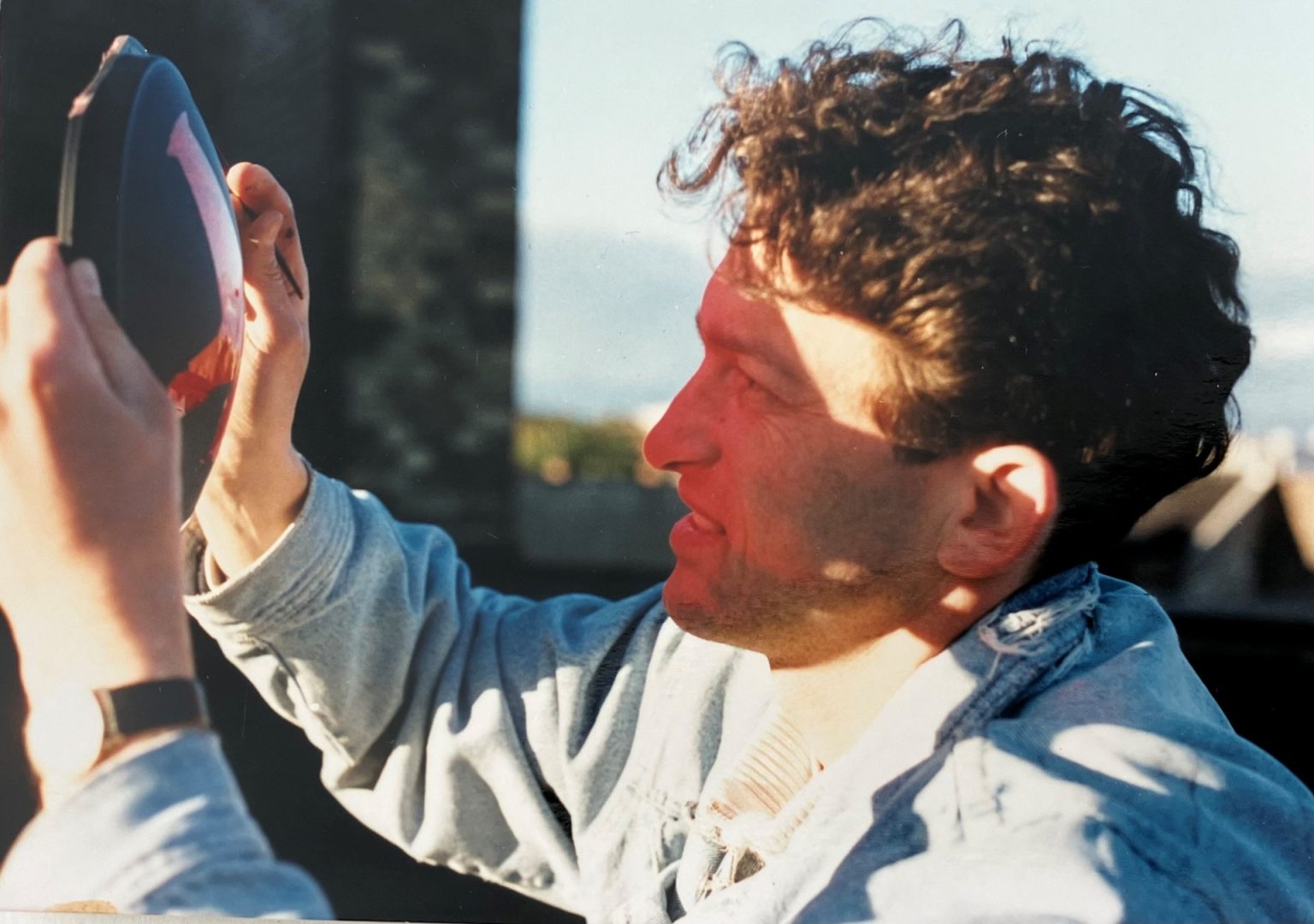
For Markus Heckhausen, a young West German designer on his first trip to East Berlin, it was love at first sight.
“It was autumn when I crossed the border. I was so used to seeing colours in the streets, in the shops, the restaurants… Suddenly everything was gray; it felt so strange. And then I saw the Ampelmann . He was a really bright, green and red, funny little man. I found him extraordinary.”
Barely a year later, the Wall comes down, and Heckhausen falls for the booming creativity, energy and spirit of the eastern part of Berlin.
“At that time the city was full of empty spaces ready to be occupied by young, creative people, a city open to art and new ideas. These artists and musicians created wonders. They started this famous club culture. Normally, in cities you don’t have this space, this canvas to get creative, to develop something. It’s all occupied by shops, brands, and other things.”
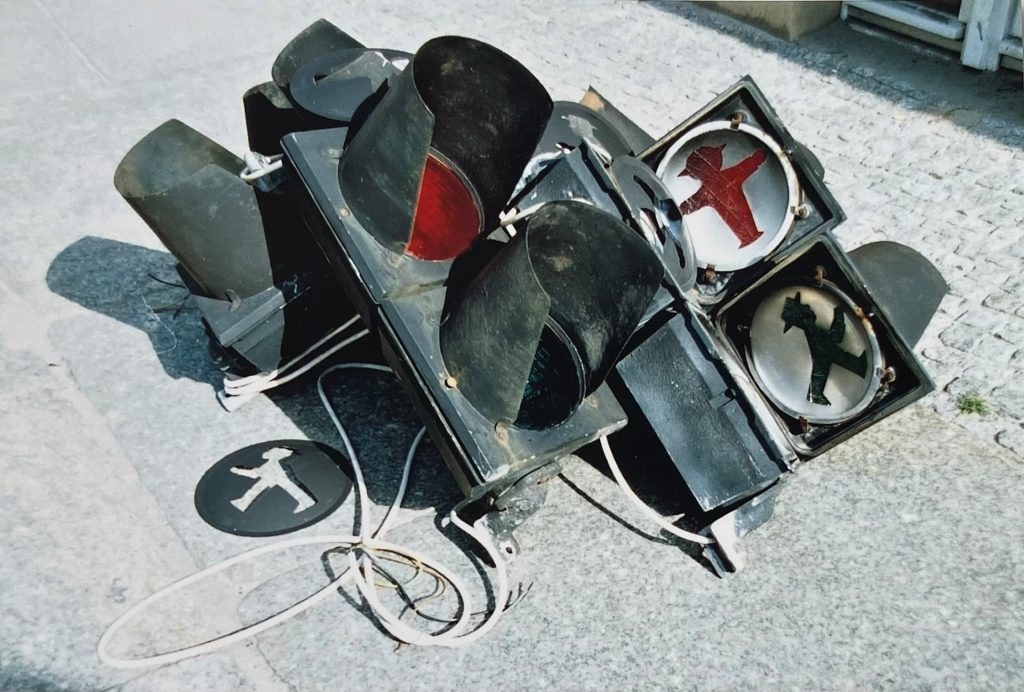
Heart set on Berlin, he moves to Auguststraße in Mitte. Driving his Trabant around, he notices they’re taking down his beloved Ampelmann traffic lights: after reunification, a lot changed – West German standardisation was taking over, removing symbols of the GDR. The Ampelmann was no exception.
From scraps to designer lamp
Seeing the opportunity, he’d ask the construction workers for scrap parts.
“At Rosenthaler Platz, I saw the technicians changing traffic light glasses, and I asked them if I can have the old ones, and they said, yeah, we’re throwing it away, you can have it”
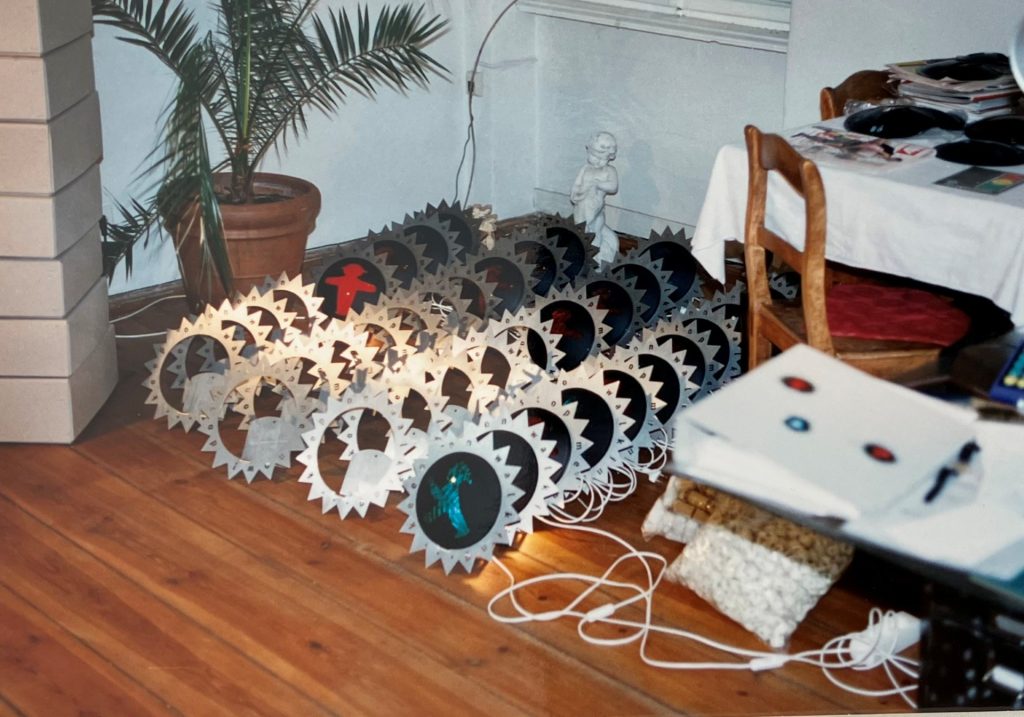
Heckhausen took the lights back to his apartment, creating a decorative house lamp using Ampelmann glass. He made the first prototype, hung it on the wall, looked at it, reflecting: “Okay, this is beautiful. Maybe I can make something out of this”
“I had to get my hands on as many as possible. I started calling people in East German cities: Potsdam, Rostock, Dresden to ask if they have any glasses left. They all started calling me when they took the old glass out. Everybody was so curious – that West German driving a Trabi – what’s he up to?”
The fight to save the ampelmann
Nevertheless, the iconic traffic light was dying out. In 1996 Heckhausen decides it’s time to take this to the press, posing the question ‘why not keep this beautiful traffic light in the East, or better yet bring it to the West too, if you want something unified?’ Eventually his ideas started to gather pace..
“I had so much luck that one East Berlin newspaper, the Berliner Kurier, ran a big spread and made a splash. Then the other newspapers, TV too, turned it into a big story. This was great. And so it got famous, it was the first step”
Alongside photos of Heckhausen’s lamp designs, his contact number was widely available during these weeks of publicity. Later that year, everything changed with one phone call.
‘“Hello I’m a colleague of Karl Peglau, the creator of the Ampelmann”. I didn’t even know who he was!”’
Karl Peglau was the traffic psychologist who had created the Ampelmann in October 1961. He was now jobless. He heard about the campaign in the papers.
Meeting with Karl Peglau
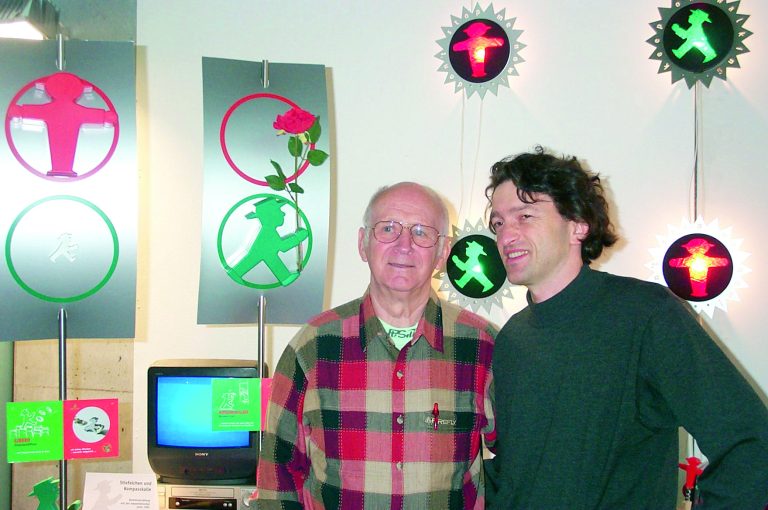
The two men immediately arranged to meet in Peglau’s flat in Berlin’s Pankow.
“When I visited Karl at his flat, I found a man disappointed by reunification – he’d lost his job and the GDR hadn’t given him the rights to the Ampelmann even though he designed it. He was unknown then, even though he was the man who had created Ampelmann – before him no one in the world ever took a second look at a traffic light man! I wanted to make things right for Karl.”
But the former GDR traffic psychologist was initially sceptical.
“He found it completely crazy that I wanted to turn traffic engineering into a design product. I convinced him we should work together. It was my wish to include him in the project. It was difficult, but it worked out. We became partners, we wrote a book together, and after this, we also became close friends”
The same year, another breakthrough…
“Politicians in the Eastern states, like Sachsen and Thüringen, said ‘Okay! This is a good thing. We want to keep the Ampelmann and preserve some of the symbols of our lost country’ And so came more and more publicity, and the traffic light was reestablished all over the East”
The East-West duo of Peglau and Heckhausen would continue designing and developing the Ampelmann brand.
Ampelmann trademarking: the court case
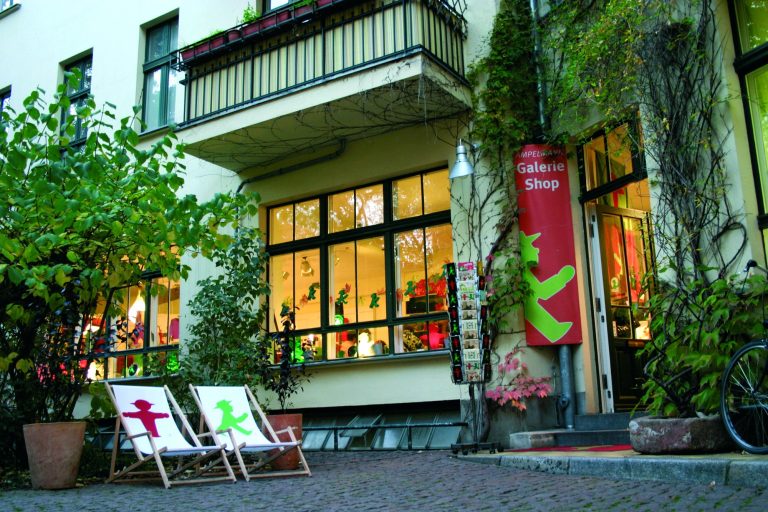
In 2001 Heckhausen opened the first of his Ampelmann shops in Berlin’s Hackesche Höfe, which is still there today. In the background there was the ongoing question of trademarking. Heckhausen included designs of both Peglau and Peglau’s secretary, Annelliese Wegner, the woman whose hand was behind many of the iconic details of the Ampelmann.
During the process Joachim Roßberg, an East German from Saxony, started claiming the rights to the Ampelmann. He was a glass producer that Heckhausen had formerly bought his lamp material from.
Heckhausen tracked him down, called him, and they both agreed not to take the story to the press. However, the following day, the Ampelmann story was once again on the newsstands, now with a new narrative: a ruthless West German capitalist trying to strip an East German of his rights to a cherished piece of GDR nostalgia. Heckhausen called again:
“-Our phone call was totally different from what happened.
-Mr. Heckhausen, you know, there’s been a long fight between Saxony and Prussia, for 300 years. We have to continue this successfully!”
The two men appeared in front of Leipzig’s regional court, in 2005, at a heavily televised trial. The appearance of Peglau was the game-changer. Heckhausen did not only pay him royalties for his creation but also a share in his company, which employed around 30 people, most of whom were East Germans. On the other hand, Peglau disliked Roßberg using his designs to sell liquor, while not sharing profits. The choice of who he would side with was obvious. Heckhausen recalls the trial:
“The decision was made in our favour. But either way, there’s no such thing as bad press. Our company became better known and from this point on, people knew that Ampelmann was a protected trademark”
A booming business
The same year as the court success, Ampelmann traffic lights were formally installed in West Berlin streets, in Spandau and Charlottenburg. From there the wins went on and on: major events like the 2006 World Cup in Germany led to special editions and collectors items, like footballs, sandals and t-shirts. The business eventually expanded to over 500 distinct lifestyle and souvenir products across six locations in Berlin, and around 80 employees.
Today, Heckhausen is a successful entrepreneur, though his commercial spin on “rescuing” an East German icon has won him some unpopularity.
“There are persisting prejudices against West Germans, especially when you come from Tübingen. The Swabians, like me, are known to be successful and not very popular. I’m aware of it, and I try to push back. Face to face, people drop the cliché. But if they only know me through the papers, I become that stereotype. Standing outside my shop, I often overhear tourists whispering, ‘Did you know West Germany stole the Ampelmännchen from East Germany?’ It always makes me chuckle.”
This summer, AMPELMANN Berlin celebrates 30 years in business. Asked what he feels, looking back at all their adventures together, Heckhausen replies:
“I’m truly grateful for this story – two cultures coming together to save him. Because above all, Ampelmann is a symbol of reunification. Even today, Berlin is still at war with itself: bikers against pedestrians, drivers against everyone else. We’re all fighting. But what I’d love is to use those traffic lights for campaigns, to bring people together instead of pitting them against one another. Berlin doesn’t need any more division, right?”
the man behind the Ampelmann
Peglau was a psychologist for the East German Medical Service of Transport. His job focused on analysing traffic accidents and developing ways to prevent them. In 1961, he designed the “Geher” (walking) and “Steher” (standing) figures. His goal was to create a signal that was more emotionally appealing and easily recognisable, especially for children and the elderly, to improve road safety.
The East German government initially rejected his proposal because it was too costly to modify existing traffic lights. Peglau campaigned for nearly a decade, leveraging his psychological expertise alongside the media and traffic authorities. His Amplemann was finally approved in 1969. After reunification, Peglau lost his job and was left to watch as his Ampelmännchen traffic lights were slowly phased out of Berlin’s streets… until he crossed paths with Heckhausen!
Feature story and interview by Aphrodite Kerameos, as part of Treetop Travel Journalism’s July 2026 magazine
Photos courtesy of Ampelmann GMBH